Rather often the seafarers apply to me for consultations as for injuries aboard during their contract period.
For the last 17 years I dealt, probably, with all kinds of diseases and injuries. To make it clear I’ll enumerate some of them.
Diseases: malaria, AIDS, hepatitis, madness, infection, various kinds of inflammation, contagious diseases, herniation, insults, cancer and so on.
Injuries: fractures, electric shocks, concussions, injuries caused amputation or loss of sight etc.
As you see, the range of cases is rather wide, and it’s easier to say what cases I haven’t dealt with.
But I’d like to talk about injuries to the first sight not so serious, but having received which we can observe a complete loss of professional working capacity. I will dwell on some of them.
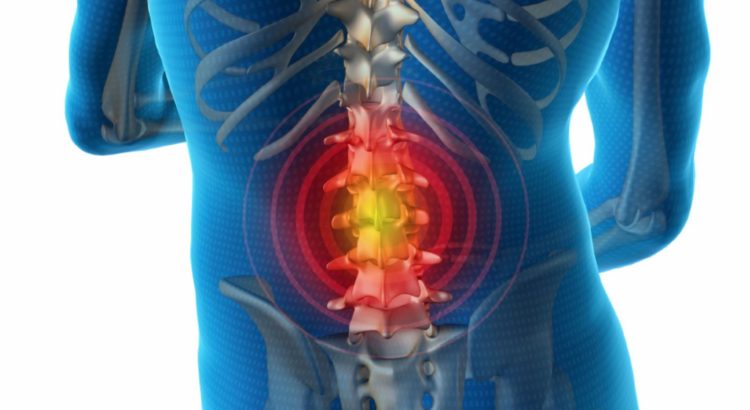
Spinal disc herniation
Many will tell me that herniation is not an injury but a disease and is not related to the work in the sea. Such opinion is always shared by the ship owners and the insurance companies. Their point is clear – if it is proved to be a disease, the seafarers lose their right to just compensation.
But I personally have the other point as for the spinal disc herniation.
Let’s distinguish simple herniation from the occupational one. I don’t mean the ones, which suffer elderly people leading inactive lifestyle, or those emerging due to age, nutrition or weight. I dwell upon occupational spinal disc herniation.
Let’s turn to the basics and sources of the issue. One of the factors causing spinal disc herniation developing is hard labor and abrupt weight lifting. That is exactly the very work the deck crew and engine space workers frequently perform.
Moreover, if apply to both national legislation and international law, the term “accident” means any harsh deterioration in the seafarer’s health during his contract period. In other words, both terms ‘accident’ and ‘incident’ can be to some degree equal. I insist on the word ‘incident’ but not the ‘disease’.
It’s a well-known fact that the spinal disc herniation can’t practically be treated. It may be conserved, healed but there is a really little chance to complete recovery.
You know, it’s pretty hard to imagine a seafarer having damaged his back on his place of employment, who is healing his injury and then rushes to the sea again. I’m not sure as for the length of his service. He’ll be working till the first lifting of the weight. I’m not sure that the ship owner will create comfort and recreational conditions of work to the seafarer.
Thus, we can say that the spinal disc herniation can lead to the complete loss of professional working ability. But everything is not so clear as it seems, there are always some obstacles.
As I have already mentioned, the ship owners don’t admit the fact of getting the herniation as an occupational disease and by all means will try to insist on its being chronicle disease of the seafarer himself.
How to contradict it and to get a fair compensation?
Let’s not forget that the burden of proving the fact of injury to the greater degree will be attributed to you, but not to the ship owner, that’s why you must at least prove the fact of hard labor itself and its consequences.
I’ll try to describe point by point what you should know and have for successful resolution of your matter.
- The accident report or medical documents from the hospital where you’ll be delivered to after your being injured. And if both (accident report and medical documents) – it’s even better.
- The medical examination, you have been passing before going to the sea, certificate. It goes without saying that in the certificate everything should be ‘clear’.
- Your full medical card history without any hint to the spinal disc or back problems.
- Medical conclusion of any competent body concerning the prohibition of work aboard the sea or river fleet with indication of cause-effect connection.
Obtaining these criteria you’ll have a chance to prove the ship owner and the insurance company your rights to compensation due to complete loss of professional work ability.